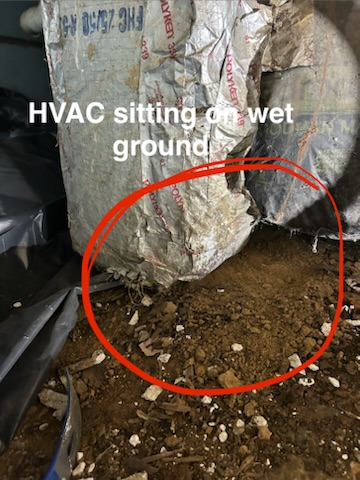
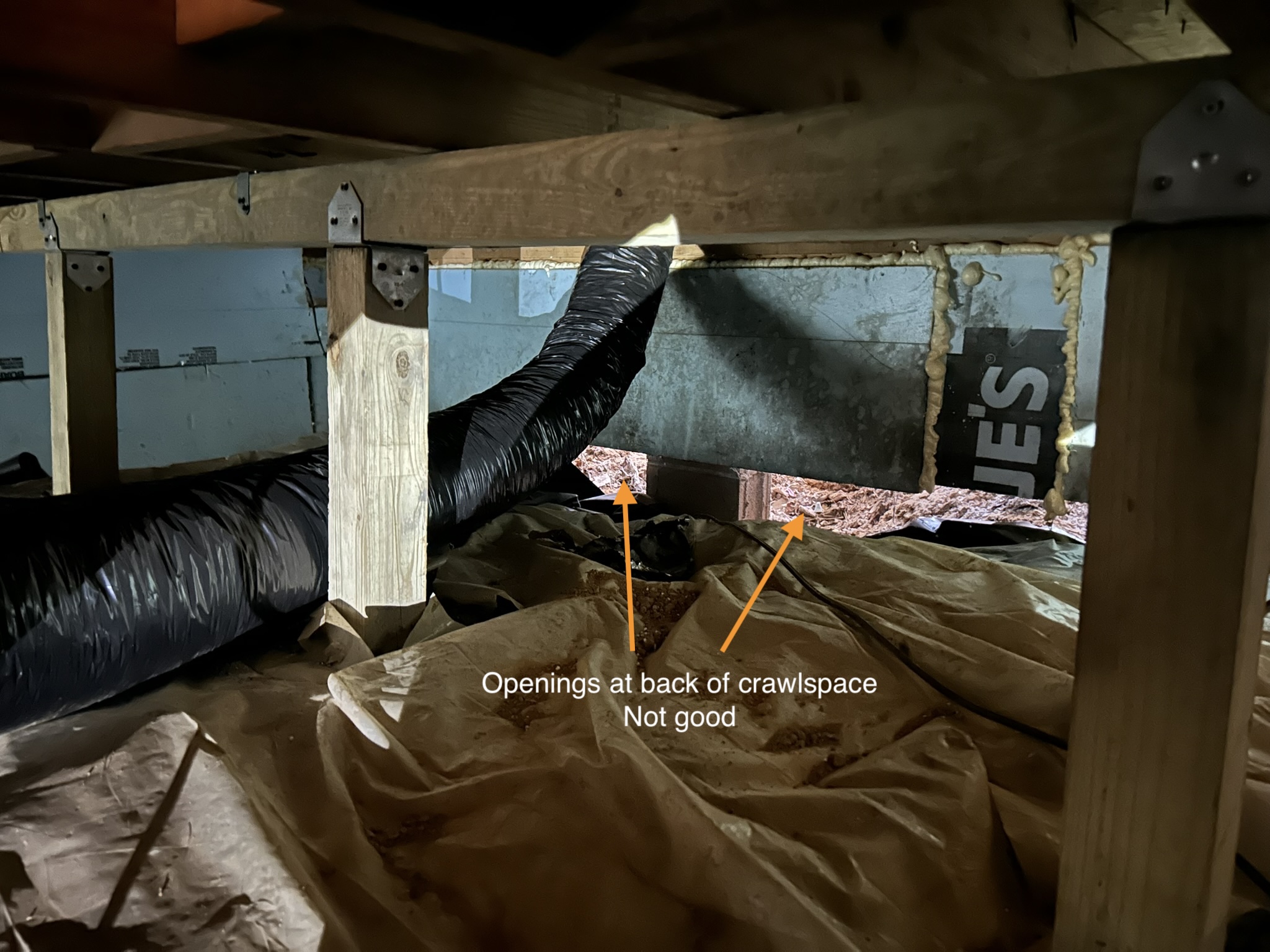
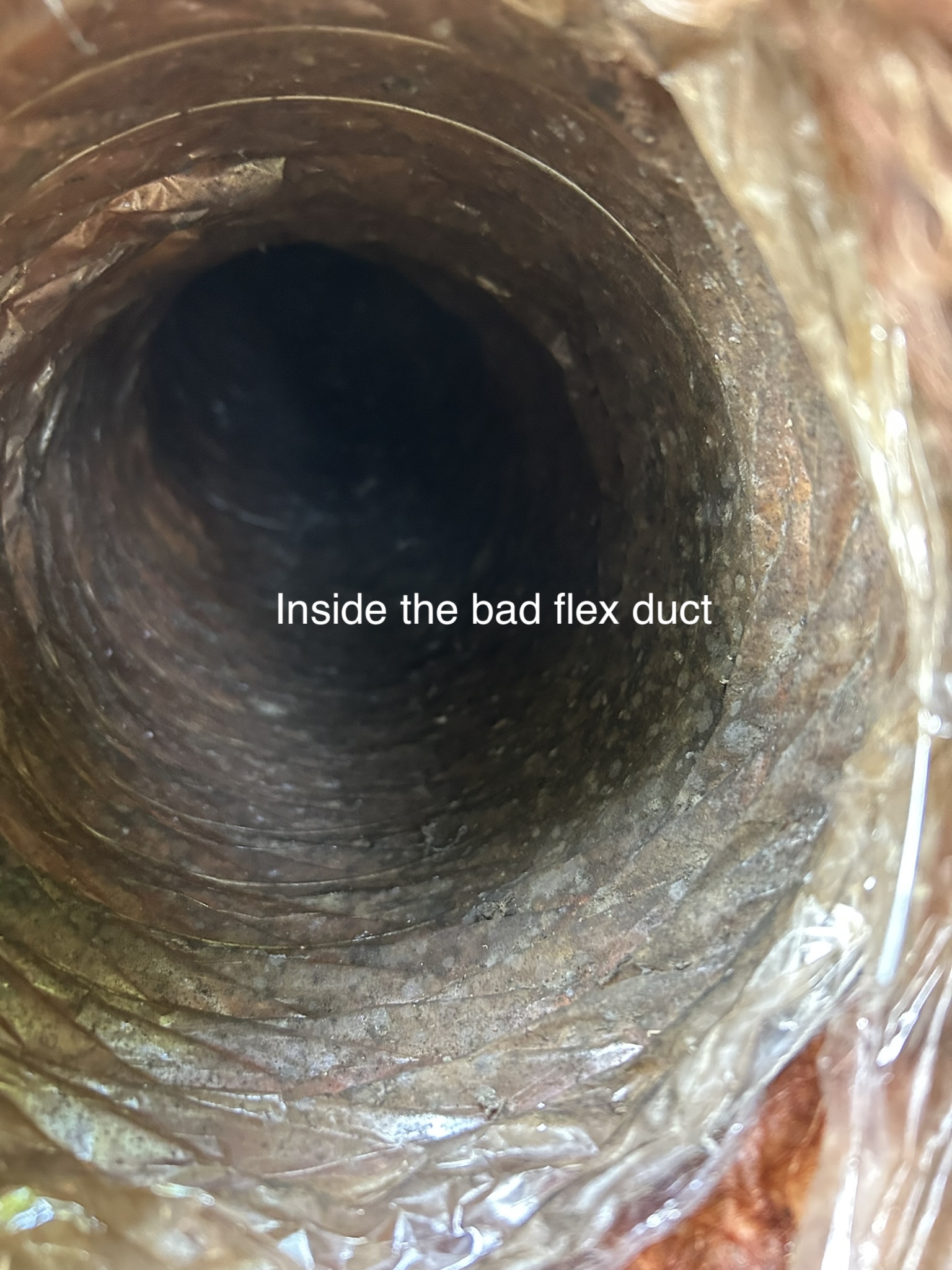
As the saying goes - if you want something done right, you have to do it yourself. This has never been more true than for my experience of having a crawlspace. If you don't know what that is, consider yourself lucky and smart. A crawlspace is the space between the ground and the main floor of some basement-less houses. I don't even know why they exist except for maybe giving you extra space to put things. For example, they went all-out on my crawlspace - there's an entire HVAC unit down there with flexible ductwork running to all corners, water and sewer pipes, electrical wires, and coax cables for internet. All I really know is that you do not want your crawlspace to have high humidity, because that creates a perfect condition for mold. The best way to make a crawlspace humid in a climate like southern Indiana is to leave the ground uncovered or have a big opening directly to the outside air. Well guess what? Both of those were true for me! It seems the home inspector utterly failed to mention that one of my air ducts, the thing carrying my breathing air, was sitting on wet dirt. He probably called the inspection good before making it to the very end of the space, otherwise he might have noticed some huge gaps leading right to the thick summer air. Anyways, I replaced the ducts and covered the ground according to code, then brought out a powerful anti-mold weapon I got for Christmas. You know you've become a boring adult when you ask for a crawlspace dehumidifier for Christmas, but it's been a life saver. Once installed, you can set the humidity level to the recommended 45%, and it will start removing water from the air.
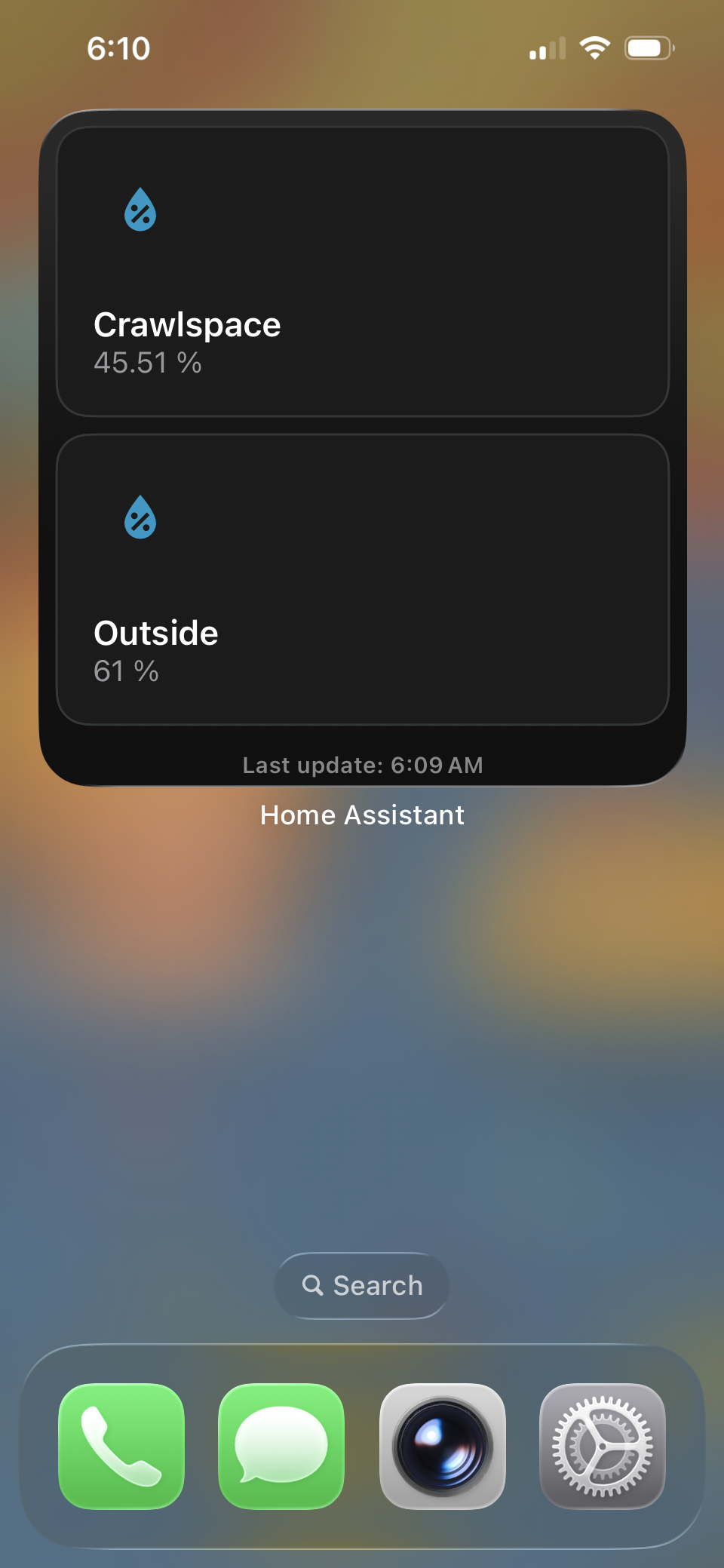
This whole crawlspace fiasco also motivated me to make my home into a smart home by setting up a wonderfully user-respecting hunk of software tools called Home Assistant. Once it's up and running, you can connect all sorts of gadgets to it. For this project, I wanted the ability to remotely monitor the humidity level of my crawlspace to make sure the dehumidifier was doing its job, so I installed a humidity sensor and paired it with Home Assistant. It was so satisfying to watch as the humidity percentage in my crawlspace dropped from the level of the outside air down to a much healthier 45%. I also made a custom Home Assistant widget for my phone so I can always compare the outside humidity to my crawlspace humidity.
I can't say I ever wanted to learn this much about crawlspaces, but when it would have cost me $4,000 on the low end to have someone else fix this problem, it became necessary to learn. That's not to say I don't value professional home services, but it's not an option for me right now. Thankfully, DIY can go a long way and make significant improvements.
Damming the tides of Hell
Comments (4)
Very insightful, I never realized that having a crawl space could cause so many problems for a home. Maybe it’s about finding the right crawl space/living area ratio. I’m sure if the crawl space was taking up the majority of your home, it would be much easier to diagnose problems, and maybe even open up some room for activities inside it!
Hey
Are you up
Thinking of you